
Home Pest Prevention Checklist for Texas Families

A single week of rain followed by Texas heat can turn a comfortable backyard into a mosquito hangout fast. This home pest prevention checklist helps families stay ahead of the conditions that invite mosquitoes, ants, roaches, spiders, and other unwanted visitors around the house and yard.
The goal is not to make your home feel like a science project. It is to handle the simple things that make a real difference, spot trouble before it spreads, and know when professional support can save time, frustration, and weekends spent chasing pests.
Start Outside, Where Most Pest Problems Begin
Many household pest problems start well before a bug appears indoors. Mosquitoes breed around water, while ants, roaches, spiders, and rodents look for shelter, moisture, and easy access to food. A clean, well-maintained yard will not eliminate every pest, but it can make your property much less inviting.
Walk your yard after rain, especially during warm months. Look beyond the obvious puddles. Water can collect in toys, plant saucers, tarps, clogged gutters, wheelbarrows, outdoor furniture covers, and low spots in the lawn. Mosquitoes can use surprisingly small amounts of standing water to reproduce.
Make these outdoor tasks part of your weekly routine during mosquito season:
Empty, drain, or cover containers that collect water, including pet bowls left outside overnight.
Keep gutters clear so water can move away from the roofline instead of pooling.
Mow regularly and trim tall grass, shrubs, and dense vegetation near patios, doors, and windows.
Pick up fallen fruit, bag yard waste, and keep trash can lids closed tightly.
Store firewood, lumber, and unused pots away from the home when possible.
Shrubs pressed tightly against the house can create a cool, shaded hiding place for pests and make it harder to notice activity along the foundation. A little breathing room between plants and exterior walls helps with airflow, visibility, and routine inspection.
Give Your Patio a Quick Reset
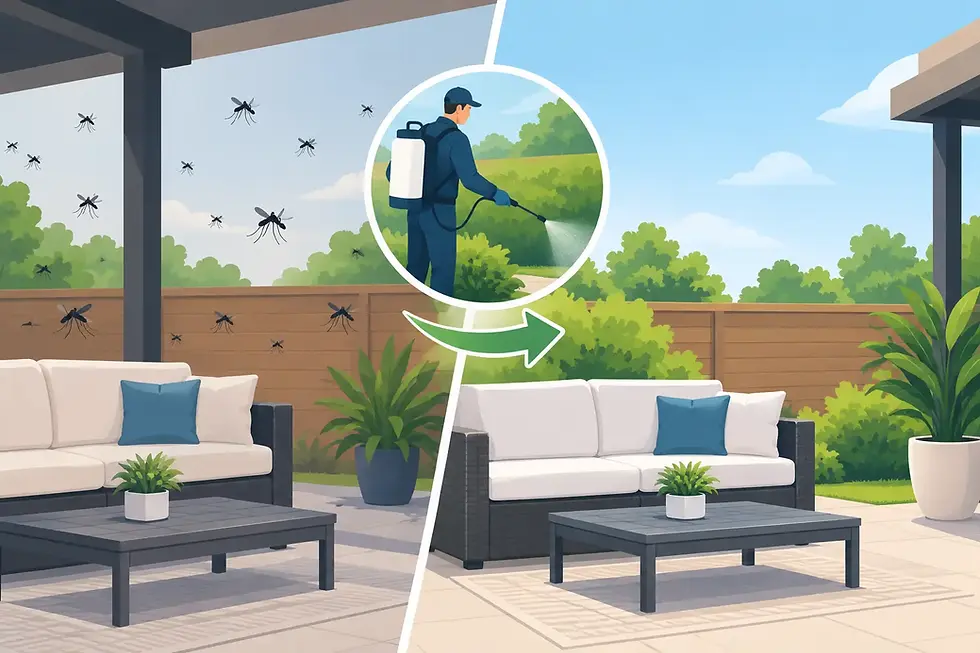
Your patio should be a place for dinner, playtime, and relaxed evenings, not a place where everyone swats mosquitoes. Sweep away leaves and debris from corners, check beneath outdoor furniture, and keep grill areas free of food residue. If you have a birdbath or other water feature, keep the water moving and maintain it as directed.
For a birthday party, BBQ, or backyard gathering, prevention works best when it begins before guests arrive. Cleaning the space and removing standing water helps, but a one-time event treatment can provide added relief when you want your outdoor space to feel party-ready.
Home Pest Prevention Checklist for Doors, Windows, and Walls
Pests do not need a wide-open door to get inside. Small gaps around utility lines, worn weatherstripping, loose screens, and cracks near the foundation can be enough. As seasons change, materials shift, and these small openings become easy entry points.
Start at the front door, back door, garage door, and any side entrances. Look for daylight around the frame, damaged door sweeps, or weatherstripping that has flattened or pulled away. Replace worn pieces rather than trying to force them back into place. A secure door seal also helps keep cooled air inside during a Texas summer.
Check window screens for tears and make sure screens fit snugly in their frames. Inspect areas where pipes, cable lines, and air-conditioning lines enter the home. Caulk small gaps where appropriate, and ask a professional about larger openings or signs that rodents may be using an entry point.
Pay special attention to the garage. It is often the bridge between the yard and the house, with cardboard boxes, pet food, clutter, and gaps around the door creating a welcoming setup for pests. Keep stored items raised off the floor when practical and avoid leaving garage doors open longer than necessary, especially after dark when flying insects are active.
Remove Food and Moisture Sources Indoors
A clean kitchen is helpful, but pest prevention is not about perfection. It is about limiting easy rewards. Crumbs under the toaster, a dripping faucet, and an open pet-food bag may seem small, but together they can keep pests coming back.
Store pantry goods in sealed containers when possible, including flour, cereal, rice, and pet food. Wipe counters after meals, sweep beneath dining areas, and take out garbage regularly. Rinse recyclables before placing them in the bin, particularly cans and bottles with sticky residue.
Water matters just as much as food. Check under kitchen and bathroom sinks for slow leaks, and do not ignore damp cabinets or a musty smell. Repairing a leak early can protect your home from water damage while removing the moisture that roaches and other pests seek out.
Laundry rooms, utility closets, and areas around water heaters deserve a look too. These spots are often overlooked because they are out of sight, but a small drip or cluttered floor can create an ideal hiding place. Keep cleaning supplies organized and avoid storing paper bags or loose cardboard directly on the floor.
Protect Pets Without Creating More Pest Pressure
Pets are family, and their routines can affect pest activity around the home. Keep pet food in a sealed container, clean bowls routinely, and avoid leaving food outdoors for long periods. If outdoor water bowls are necessary, refresh the water daily and avoid allowing it to sit overnight.
Also check the areas where pets sleep, eat, and enter the house. Pet doors should close securely, bedding should be washed regularly, and backyard pet waste should be picked up promptly. These simple habits help reduce odors, flies, and other pest attractants while keeping your yard more enjoyable for everyone.
When considering treatments, read labels carefully and follow application directions. A professional pest control provider can also explain how to prepare your home and yard so treatments are used thoughtfully around children and pets.
Adjust Your Routine for North Texas Weather
In Murphy, Sachse, Garland, Rowlett, Rockwall, Sunnyvale, and nearby Dallas neighborhoods, pest pressure changes with the weather. Heavy rain can create sudden mosquito breeding spots. Long dry stretches can send ants, spiders, and other pests searching for water indoors. The first cold snap may push pests toward warmer, protected spaces.
That is why a once-a-year cleanup is rarely enough. During peak mosquito months, take a quick look around the yard each week. During cooler months, focus on sealing openings, clearing leaves, and checking garages, attics, and storage areas for signs of activity.
It also depends on your property. A home near a creek, greenbelt, pond, or heavily shaded area may need more frequent mosquito attention. Homes with large patios, pools, outdoor kitchens, or frequent gatherings may benefit from seasonal protection that keeps the yard comfortable without adding another chore to the family calendar.
Know When It Is Time to Call a Professional
DIY prevention handles a lot, but it has limits. Repeated mosquito activity, trails of ants that keep returning, roaches seen during the day, or pests appearing in several rooms can point to a larger issue. So can bites that keep your family indoors despite your best efforts outside.
Professional service is especially useful when you want consistent coverage through the season rather than reacting after every flare-up. Mosquito And Pest Pros offers straightforward options for seasonal mosquito reduction, year-round home and yard protection, and one-time event treatments for outdoor celebrations.
Before a service visit, note where you are seeing pests, when activity is highest, and whether the problem changes after rain. Those details help identify the likely source and support a treatment plan that fits your home, pets, and outdoor routine.
A few minutes of prevention can protect far more than a patio. It can protect the unplanned evenings outside, the kids playing in the grass, and the simple comfort of coming home without wondering what is waiting around the next corner.


Comments