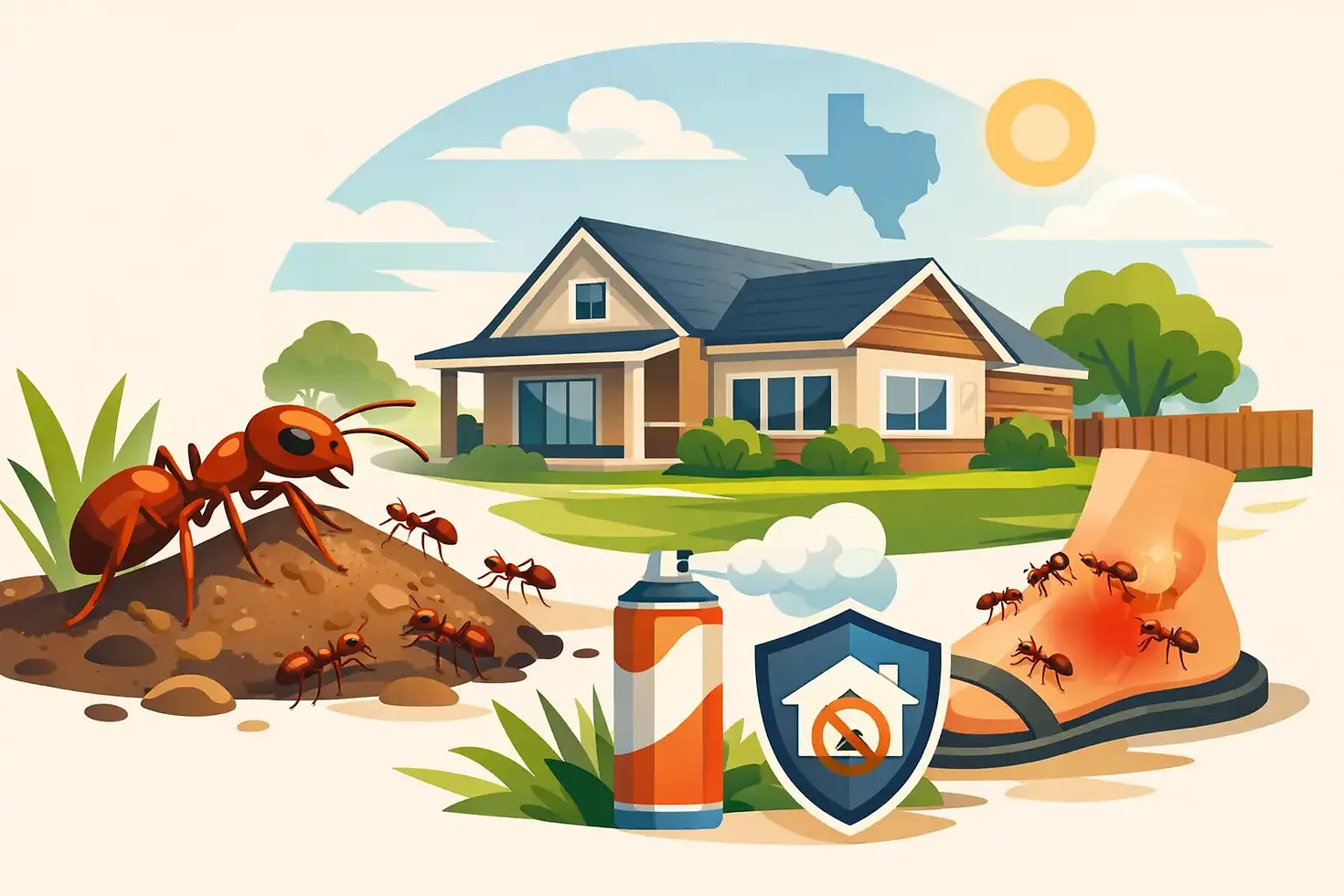
Fire Ants in North Texas: Stop Stings at Home

A fire ant mound can look harmless on a busy Saturday morning - until a child steps near it, a dog investigates it, or you feel those first sharp stings while pulling weeds. Fire ants in North Texas are more than a backyard nuisance. They can make lawns, patios, play areas, garden beds, and outdoor gatherings feel off-limits when you want to enjoy them most.
For families around Murphy, Sachse, Garland, Rowlett, Rockwall, and nearby communities, fire ant control is about getting comfortable in your own yard again. The right approach depends on how many mounds you have, where they are located, and how often they return.
Why Fire Ants in North Texas Keep Showing Up
North Texas gives fire ants plenty to like: warm weather, moisture after rain, irrigated lawns, mulch beds, and plenty of open ground for building colonies. Mounds often appear after a soaking rain or lawn watering, sometimes seeming to pop up overnight. They may be found along sidewalks, fence lines, driveways, landscaping edges, beneath shrubs, and around outdoor equipment.
A visible mound is not always the whole problem. Fire ants can move their colony when disturbed, when the ground becomes too wet, or when food and moisture conditions change. That is why knocking down a mound with a shovel, spraying it with a hose, or pouring random household products on it can create more frustration than relief. The ants may relocate a few feet away, or several yards away, and rebuild.
They also do not follow a neat seasonal calendar. Activity often increases during warm, wet stretches, but North Texas winters are mild enough that fire ants may remain a concern well beyond summer. A few quiet weeks in the yard does not necessarily mean the colony is gone.
The Places That Need Attention First
Not every mound creates the same risk. A mound in a far corner of a large yard may be less urgent than one near a swing set, mailbox, patio, garden path, or pet run. Start by looking at how your family actually uses the property.
Areas near children’s play spaces deserve fast attention because fire ants can swarm when their mound is disturbed. Pets are also vulnerable, especially curious dogs that paw at the ground or lie in the grass. Take a look around water bowls, kennel areas, under decks, near outdoor toys, and along the edges of patios where bare feet tend to travel.
For homeowners planning a birthday party, cookout, graduation celebration, or backyard wedding, inspect the event area several days ahead rather than waiting until guests arrive. Fire ants do not need much space to cause a problem. One active mound near chairs, a buffet table, or a bounce house can change the mood quickly.
What to Do When You Find a Fire Ant Mound
The first rule is simple: keep people and pets away from the mound. Mark the area if needed, especially if it is near a path or play zone. Avoid stirring the mound to see whether it is active. Fire ants respond quickly to disturbance, and that can put you directly in their path.
For a single, accessible mound, a properly labeled fire ant treatment may be a reasonable homeowner option. Follow the product label exactly, including instructions for application, watering, and pet or child reentry. More product is not better, and combining treatments without directions can create unnecessary risk or reduce effectiveness.
Home treatment can work best when the problem is limited and you are able to monitor the area afterward. The trade-off is that spot treatment focuses on the mound you can see. It may not address smaller colonies developing elsewhere in the yard, and it may not provide lasting coverage when fire ant pressure is high.
Avoid relying on gasoline, bleach, boiling water, or improvised chemical mixtures. These methods can harm grass and landscaping, create safety hazards, damage soil, and still fail to eliminate the colony. A yard should not become a science experiment just because ants showed up after rain.
When One Mound Becomes a Yard-Wide Problem
If fire ant mounds keep returning, appear in multiple parts of the property, or sit near places your family uses every day, a broader treatment plan usually makes more sense. A professional can assess the activity across the yard and use an approach designed for control beyond one visible mound.
This matters because fire ant colonies are not always obvious. A lawn can look clear from the patio while smaller mounds are forming along a fence line, behind a shed, in a flower bed, or around utility equipment. Consistent yard monitoring and scheduled treatment help reduce the cycle of treating one mound, then finding another a week later.
At Mosquito And Pest Pros, the goal is not to make your lawn feel restricted while it is being protected. Our home and yard protection service is built for families who want dependable help with recurring outdoor pests and a more comfortable space for kids, pets, and weekend plans. Treatments are selected and applied with homeowner-friendly, pet-conscious practices, along with clear guidance about when the treated area is ready to use again.
Protecting Kids, Pets, and Guests From Stings
Prevention starts with awareness. Teach children not to stand on ant mounds or poke them with sticks. Keep shoes on in grassy areas where mounds may be hidden, and check the yard before setting up sprinklers, lawn games, inflatable slides, or picnic blankets.
If someone is stung, move away from the area first. Fire ants can cling to skin and sting repeatedly, so brushing ants off promptly is helpful. Gently wash the area with soap and water, and use a cool compress for comfort. Many stings cause localized burning, itching, redness, or small pustules later on.
Some people can have a more serious reaction. Seek urgent medical help for trouble breathing, swelling of the face or throat, dizziness, widespread hives, or other signs of a severe allergic reaction. For infants, older adults, or anyone with a known allergy to insect stings, it is wise to be extra cautious and contact a medical professional with questions.
Pets may react with pawing, licking, limping, swelling, or agitation after an encounter. Check feet, legs, and the belly area if your pet has been near a mound. Contact your veterinarian if symptoms are severe, persistent, or concerning.
A Smarter Routine for a More Usable Yard
Fire ant control works best as part of regular yard care, not as a last-minute response after someone gets stung. Walk the property after heavy rain, before parties, and before letting children play in less-used corners of the lawn. Pay attention to sunny open areas as well as landscaped beds and the edges of hard surfaces.
Good lawn care can make inspections easier, although it will not prevent every colony. Keep grass trimmed, reduce excess clutter near the ground, and avoid leaving pet food outdoors. Most importantly, do not assume a flat mound means the problem has disappeared. Fire ants can rebuild quickly, shift locations, and remain active beneath the surface.
When mounds are recurring or showing up near the spaces that matter most, dependable professional service can save time and reduce the guesswork. Your backyard should be ready for a quiet evening outside, a dog chasing a ball, or a table full of neighbors - not an unexpected fire ant encounter.


Comments